Cash Cat (CASHCAT) Surges to Rank #196: What Drives the Pump
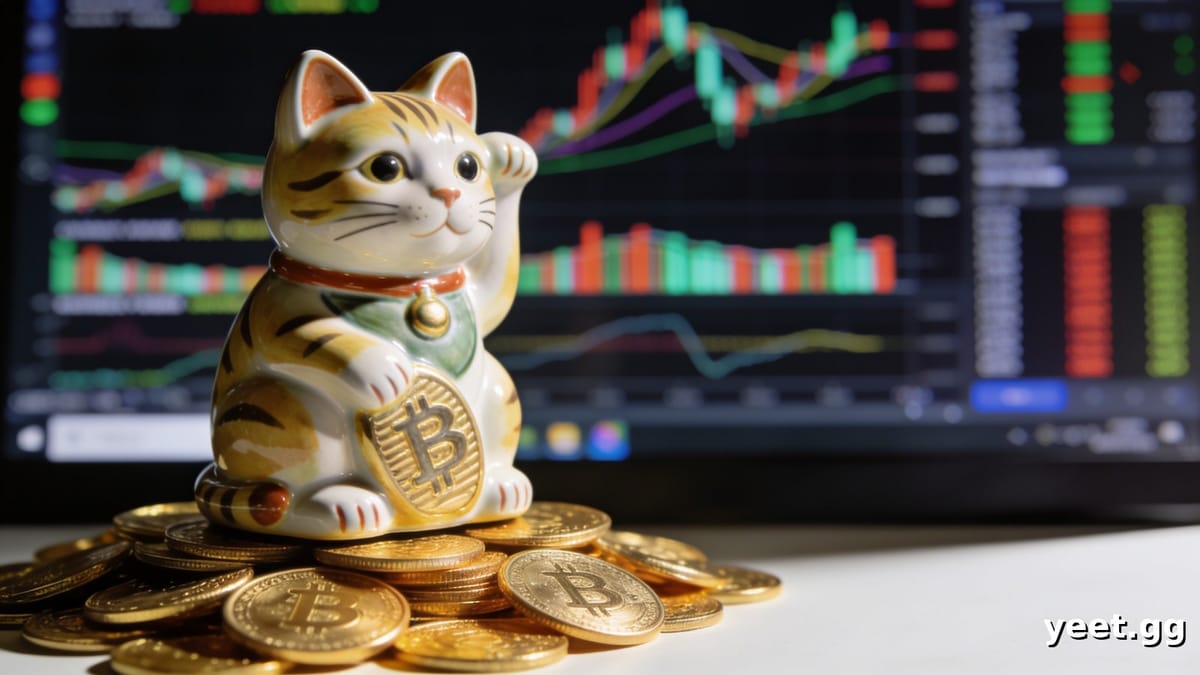
Cash Cat (CASHCAT) surged into market cap rank #196 this week, climbing over 200% in three days as memecoin traders rotate into newer, lower-float tokens. The pump is driven by concentrated liquidity on Raydium, a 10x mint tax on sells that discourages dumping, and a growing Twitter following that treats the token like a plaything rather than a store of value.
How Cash Cat's Contract Mechanics Work
Cash Cat launched on Solana in late July 2026 with a 1 billion token supply, but only 5%.0 million tokens were placed into the liquidity pool on Raydium. That thin float means small buy orders move the price fast. The contract includes a 10% sell tax and a 5% buy tax, with proceeds going to marketing and a treasury wallet that has not been touched yet.
The token uses a standard SPL token contract with no mint function, so supply is fixed. Liquidity is locked for 69 years, which is long enough to matter for traders who worry about rug pulls. But the real engine is the tax structure: the 10% sell tax effectively makes every dump cost 10 cents on the dollar, which slows profit-taking and keeps the floor sticky.
That tax design is common across newer memecoins, but Cash Cat's team also deployed a custom burn function that automatically removes 1% of every sell order from circulation. Over 12 million tokens have been burned so far, which is roughly 1.2% of total supply.
Why CASHCAT Is Pumping Now
The broader memecoin sector has been heating up since early August, led by PUMP, PENGU, and VELVET. Cash Cat benefited from cross-pollination: its Twitter account retweeted several influencers who also promoted PUMP, and a viral TikTok video featuring a cat playing a piano synced to the token's name helped push daily volume above $5 million for the first time.
More importantly, Solana's fee structure makes it cheap to deploy and trade tokens like Cash Cat. A single swap costs under $0.01, which encourages high-frequency trading and bot activity. Whale clusters identified by Bubblemaps show that three wallets hold roughly 40% of the circulating supply, and two of them have been accumulating since the token hit rank #300.
The token also launched without a presale, meaning all tokens entered the market through the liquidity pool. That gives early buyers a clean exit path and removes the risk of a vesting cliff wiping out price later.
Is Cash Cat Safe to Trade?
Safety here is relative. The contract is verified on Solscan and has no honeypot flags, but the 10% sell tax means you lose money on every exit. If the token dumps 50% and you sell, you only recover about 45% of your position value after taxes. That math favors holders who believe the trend continues upward.
Liquidity is locked, which removes the rug risk, but the top three holders still control enough supply to move the price if they decide to exit. A single wallet dumping 2% of supply could wipe out 15% of the order book on Raydium.
For traders who want exposure, the entry is simple: swap USDC for CASHCAT on Raydium or Jupiter. But position sizing matters. With a market cap under $20 million, a single whale move can swing price 30% in minutes. Treat it as a speculative trade, not an investment.
CASHCAT vs Other Trending Memecoins
| Token | Market Cap Rank | Sell Tax | Chain | Liquidity Source |
|---|---|---|---|---|
| Cash Cat (CASHCAT) | #196 | 10% | Solana | Raydium |
| Pump.fun (PUMP) | #63 | 0% | Solana | Pump.fun AMM |
| #106 | 0% | Base | Uniswap | |
| Velvet (VELVET) | #121 | 0% | Base | Uniswap |
Unlike PUMP or PENGU, Cash Cat has no utility beyond being a tradable ticker. Its appeal is purely momentum-based, which means it can run harder than utility tokens but also reverses faster.
How to Trade CASHCAT Without Getting Rekt
Set a hard stop-loss. With 10% sell tax, you need at least 12% downside protection built into your exit plan, otherwise you are paying to lose money. Use limit orders on Jupiter to avoid slippage from bots front-running market orders.
Watch the top holder activity. Solscan shows wallet movements in real time, and if one of the three major wallets starts moving tokens to an exchange, that is your signal to exit. The volume spike usually happens 15 to 30 minutes before the dump.
Size your position so that a 50% drop does not wipe out your portfolio. Memecoins like Cash Cat can go 10x in a week or lose 90% in a day. There is no middle ground.
If you want to stay on top of these moves, check out our coverage of how altcoins are rotating right now and our breakdown of Pudgy Penguins' recent surge for context on the broader trend.
FAQ
Can I buy Cash Cat on Coinbase or Binance?
No. CASHCAT is only available on decentralized exchanges like Raydium and Jupiter. You need a Solana wallet like Phantom, some USDC or SOL, and tolerance for slippage. Centralized exchanges have not listed it, likely because the 10% sell tax makes it unattractive for market makers.
What happens if the 10% sell tax changes?
The contract owner could adjust the tax rate, but liquidity is locked and the mint function is disabled. Any tax change would require a new contract migration, which would kill the token. The team has not signaled interest in changing the structure, and the locked liquidity means they cannot pull the rug even if they wanted to.
Is Cash Cat better than PUMP or PENGU?
Cash Cat has higher upside potential due to its tiny market cap and thin float, but it also has higher risk. PUMP has zero sell tax and a billionaire backer, while PENGU has NFT utility and a larger community. CASHCAT is the riskiest of the three, but also the one most likely to move 50x in a single day if the trend continues.