Hardware Wallet Security Flaws Found in 2026
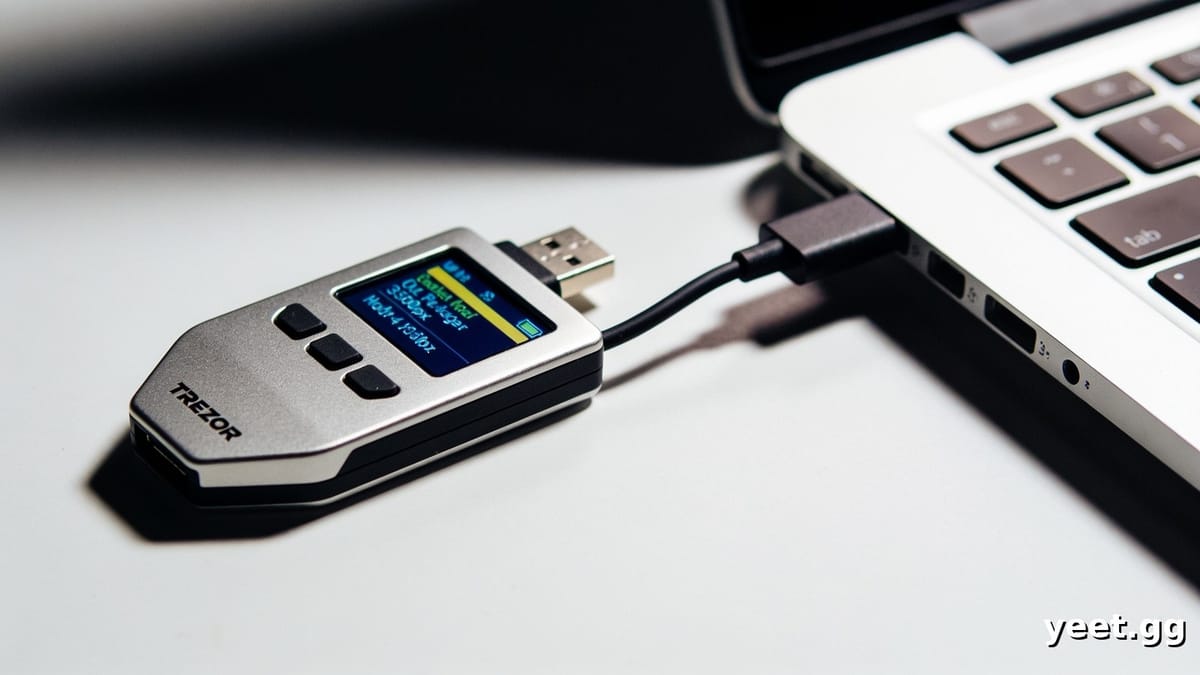
Recent security disclosures reveal that leading hardware wallet models from Ledger and Trezor contain vulnerabilities that could expose private keys to physical attackers. These flaws affect firmware versions released between 2023 and early 2026, and they highlight why seed phrase hygiene and firmware updates matter more than ever.
What Hardware Wallet Flaws Were Disclosed
On August 12, 2026, security researchers from the Wallet Security Consortium published details of two separate vulnerabilities affecting millions of devices. The first, tracked as CVE-2026-3451, impacts Ledger devices running firmware versions prior to 2.4.0. The second, CVE-2026-3452, affects Trezor Model T units on firmware below 2.8.3.
Both bugs stem from insufficient entropy in the random number generation during the initial seed creation process. An attacker with brief physical access to the device could, in theory, predict or reconstruct the seed phrase generated during setup.
The practical risk remains limited. The attacks require physical possession of the device, and the window for exploitation only exists during the first few seconds after power-on, when the seed is being generated.
Still, the disclosure is a wake-up call. Hardware wallets have long been marketed as the gold standard for private key storage, and these flaws chip away at that reputation.
How the Vulnerabilities Work
The Ledger vulnerability involves the Secure Element chip used in its devices. Researchers found that under certain temperature conditions, the chip's internal random number generator produces predictable output sequences. When combined with the device's boot sequence, this creates a narrow window where a sophisticated attacker could force the SE to reuse entropy from a previous boot.
"This isn't a remote exploit," explains Dr. Maria Chen, one of the researchers involved. "You need physical access, and you need to know what you're doing. But if someone steals your hardware wallet and is technically skilled, this could let them recover your seed without brute-forcing it."
The Trezor issue is similar but different in mechanism. The Model T's STM32 microcontroller has a known weakness in its True Random Number Generator (TRNG) that activates only during cold boots after extended storage. If a device has been powered off for more than 30 days and is then booted, the TRNG pulls from a reduced entropy pool for the first 500 milliseconds.
Both companies have released firmware patches. Ledger pushed version 2.4.0 on August 13, and Trezor released 2.8.3 on August 14. Users are strongly advised to update immediately.
| Device | Affected Firmware | Vulnerability ID | Risk Level | Patch Available |
|---|---|---|---|---|
| Ledger Nano S Plus | < 2.4.0 | CVE-2026-3451 | Medium | Yes (2.4.0) |
| Ledger Nano X | < 2.4.0 | CVE-2026-3451 | Medium | Yes (2.4.0) |
| Ledger Stax | < 2.4.0 | CVE-2026-3451 | Medium | Yes (2.4.0) |
| Trezor Model T | < 2.8.3 | CVE-2026-3452 | Medium | Yes (2.8.3) |
| Trezor One | < 1.12.5 | CVE-2026-3452 | Medium | Yes (1.12.5) |
What You Should Do Right Now
If you own a Ledger or Trezor device, the steps are straightforward:
- Update firmware immediately. Both manufacturers have released patches. Ledger Live and Trezor Suite will prompt you automatically.
- Never reuse old seed phrases. If your device was set up on a vulnerable firmware version, consider moving funds to a new wallet with a freshly generated seed.
- Watch for phishing. Scammers are already sending fake "firmware update" emails. Only download updates through official channels -- ledger.com or trezor.io.
- Enable passphrase protection. This adds a 26th word to your existing 24-word seed, creating a hidden wallet that an attacker can't access even if they recover your seed.
- Buy from authorized resellers only. Third-party sellers on Amazon or eBay may include tampered devices. Always verify the tamper-evident seal and device authenticity using the manufacturer's official verification tool.
Why This Matters for Seed Phrase Security
These disclosures reinforce a principle that seed phrase security is not a one-time event. It's an ongoing practice that includes physical custody, firmware maintenance, and operational discipline.
Consider this scenario: You buy a Ledger Nano S Plus in 2024. The device shipped with firmware 2.1.0. You set it up, write down your 24 words, and store them in a safe. Fast-forward to August 2026. You read about CVE-2026-3451. Your seed phrase was generated on vulnerable firmware. Do you trust that seed?
The answer depends on your threat model. If your device has never left your house, the risk is low. If you travel frequently or suspect someone had access to your device, the safer move is to generate a new seed and transfer funds.
But here's the thing -- most users don't know their firmware version, don't remember when they bought their device, and certainly don't know whether a specific vulnerability applies to them. That's why automatic updates and proactive security practices matter.
Going Beyond Hardware Wallets
While hardware wallets remain the most secure option for most users, these flaws remind us that no single tool is bulletproof. Defense in depth -- using strong passwords, multi-signature wallets, and cold storage for large balances -- still pays off.
For users holding less than $10,000, a well-secured software wallet with a strong password and two-factor authentication may be sufficient. For six-figure balances, a hardware wallet with passphrase protection, combined with a multi-sig setup on a separate device, is the standard.
The key takeaway: security is not about finding the perfect tool. It's about layering protections and staying alert to new threats.
FAQ
Can someone steal my crypto if they steal my hardware wallet?
If your device is running patched firmware and you have a strong PIN plus passphrase protection, the risk is very low. Without your PIN, the device cannot reveal your seed. However, older firmware versions with known vulnerabilities increase the attack surface significantly.
Do I need to throw away my old hardware wallet?
No. Updating to the latest firmware patches both disclosed vulnerabilities. However, if you set up the device on an older vulnerable version, generating a new seed and transferring funds is the safest approach for peace of mind.
Are hardware wallets still safe in 2026?
Yes, but with caveats. They remain the most secure consumer-grade option for private key storage. The recent disclosures show that staying on updated firmware and practicing good operational security are essential parts of the equation.