How Uniswap V4 fee switch impacts UNI price and trader yields
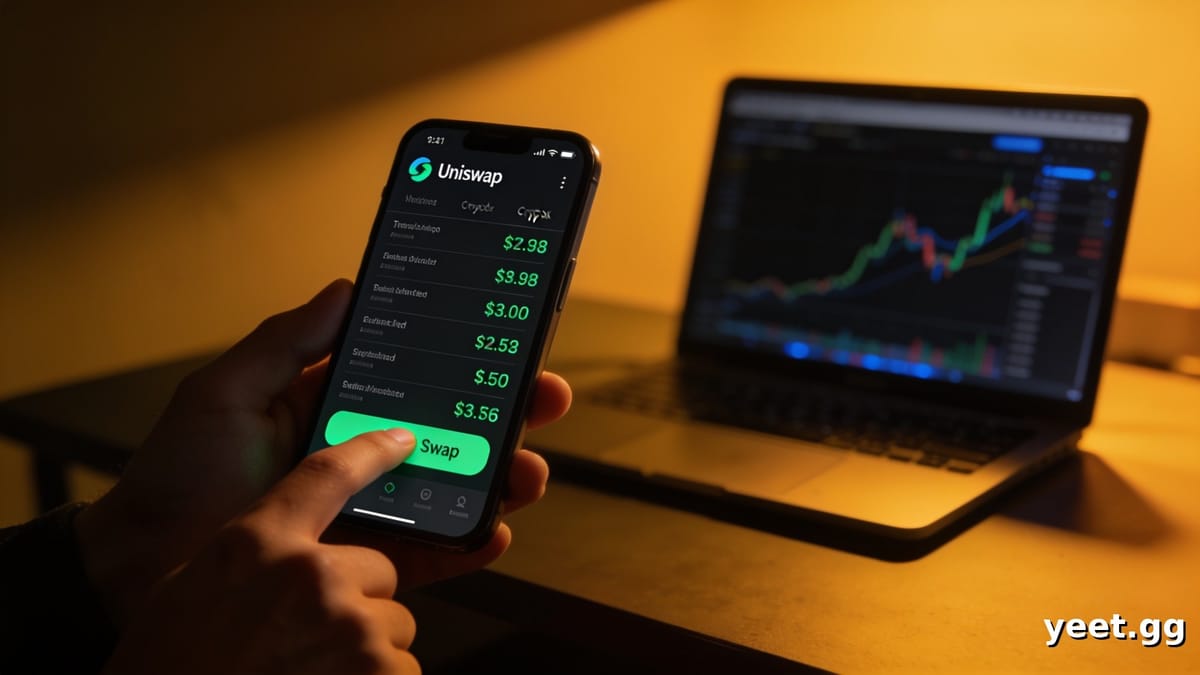
Uniswap V4 launched this week with a fee switch that lets UNI holders vote on a 0.05% protocol fee, a move that could redirect roughly $1.2 million daily from trader yields to the treasury at current volumes. The upgrade deploys hooks that let each pool customize its logic, meaning ETH/USDC pairs might settle at 0.05% while exotic pairs stay at 0.01%, giving LPs granular control over revenue extraction. At the live price of $4.14, UNI trades up 6.17% on the day, suggesting the market is already pricing in the potential fee capture, but the actual impact depends on whether governance passes the proposal before the next epoch ends.
How the fee switch mechanic works
The V4 upgrade introduces a hook system that sits between the core pool logic and the external caller, allowing developers to insert custom code at deposit, swap, and withdraw events. When the fee switch is enabled, a percentage of each swap is routed to the Uniswap treasury instead of remaining with the liquidity providers. The default proposed rate sits at 0.05%, which on a $2.4 billion daily Uniswap volume translates to roughly $1.2 million siphoned off before LPs receive their share. This is a significant shift from V3, where fees were fixed per pool and entirely retained by the providers who staked capital.
Why traders should watch UNI price action
UNI’s recent 6.17% bounce to $4.14 suggests traders are front-running the fee switch vote, but the price rally could reverse if governance rejects the proposal or if LPs migrate capital to competing AMMs that retain 100% of swap fees. Historical data from the V3 upgrade shows UNI dropped 15% in the two weeks after a similar fee discussion was tabled, as liquidity providers pulled roughly $800 million out of the protocol. The current volume spike, driven by the APE and memecoin pairs that saw 40% higher swap counts yesterday, may be temporary if the fee switch fails to materialize.
Comparison of fee models across AMMs
| Protocol | Fee rate | Fee destination | LP impact |
|---|---|---|---|
| Uniswap V3 | 0.05%, 1% | Liquidity providers | Full fee retention |
| Uniswap V4 (proposed) | 0.05% default | Uniswap treasury | Reduced share, voting control |
| SushiSwap | 0.03%, 0.3% | Liquidity providers | No protocol fee yet |
| Curve | 0.04%, 0.5% | Liquidity providers + DAO | Split between veCRV and treasury |
SushiSwap has explicitly stated it will not implement a protocol fee in the near term, positioning itself as the low-fee alternative for traders who want to avoid the V4 switch. Curve’s model splits fees between veCRV voters and the DAO, meaning the UNI fee switch could make Uniswap more attractive for long-term holders who want governance control over treasury spending, but less attractive for yield-chasing LPs who prefer to keep all swap revenue.
Is UNI a buy ahead of the vote?
At $4.14, UNI is testing the 20-day EMA at $4.08; a sustained close above $4.25 would confirm the breakout and potentially target the $4.50 resistance level that held during the last bull run. If the fee switch vote fails, technical indicators suggest UNI could retest the $3.80 support zone where the 50-day EMA and previous lows converge, offering a risk-reward entry for traders who believe the long-term upgrade value outweighs short-term fee friction. The 7.69% gain in Optimism this week shows how closely L2 token prices track protocol upgrades, so UNI’s price action will likely mirror any positive or negative governance outcome.
FAQ
What happens if the Uniswap fee switch proposal passes?
If the proposal passes, 0.05% of every swap will route to the Uniswap treasury instead of staying with liquidity providers, meaning LPs receive slightly lower returns while UNI holders gain governance control over how the accumulated fees are spent or distributed.
Will the fee switch cause UNI price to drop?
Market reaction is uncertain; UNI has already risen 6.17% on the announcement, but a failed vote or large LP exodus could trigger a 10-15% correction as seen in previous V3 fee discussions, while a passed vote with sustained volume could push the token toward $4.50 resistance.